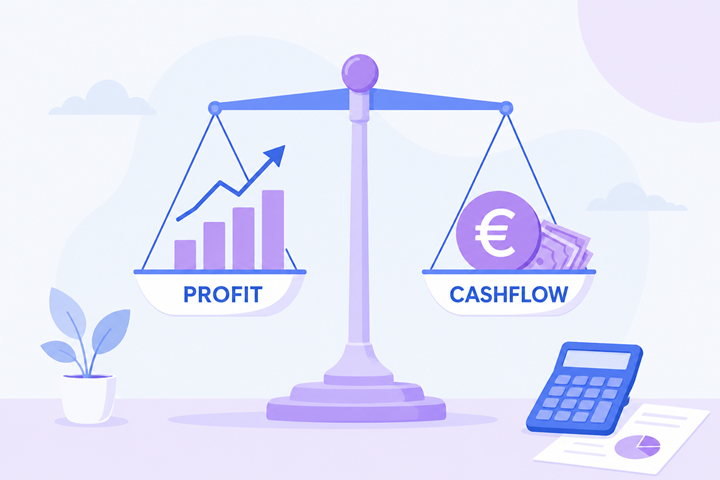
Profit vs Cashflow — Why the Difference Matters More Than Most Business Owners Think
Your business can be profitable and still run out of cash. Here’s why the two are different, why it matters, and what to do about it.
It’s one of the most common conversations in accountancy.
A business owner sits down to review their annual accounts. The business made a profit. Everything looks fine on paper. And then comes the question that too few accountants ever properly answer.
“So if we made a profit, why does it always feel like there’s never any money?”
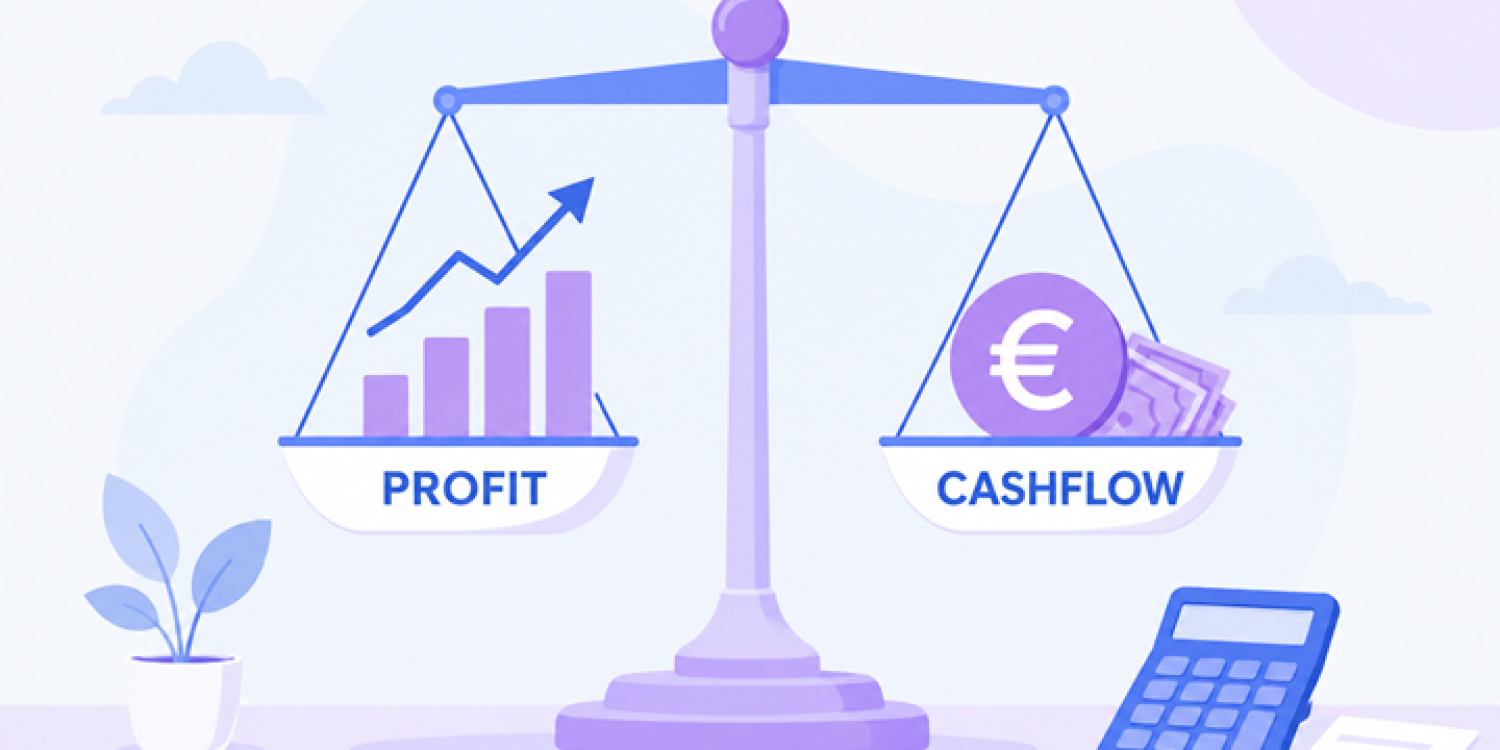
It’s a completely valid question. And the answer comes down to understanding the difference between profit and cashflow. Because they are not the same thing. And confusing the two is one of the most common — and most expensive — consequences of only seeing your numbers once a year.
What profit actually tells you
Profit is what’s left after you subtract your costs from your revenue. It’s on the Profit and Loss statement and it tells you whether the business model is working — whether the pricing is right, costs are being managed well, and the operation is financially viable.
That’s genuinely useful information. But profit is a measure of performance, not a measure of what’s in the bank account. It tells you how the business did. It doesn’t tell you what can be spent today.
What cashflow actually tells you
Cashflow is the movement of real money — in and out of the business, when it actually happens. Not when an invoice is issued. Not when a cost is recorded. When the cash physically moves.
That distinction matters more than most people realise.
A client can be invoiced today and the accounts show a healthy profit. But if that client pays in 60 days, the money isn’t real to the bank account for two months. In the meantime wages still go out. VAT is still due. Suppliers still want paying. Profit doesn’t cover any of that. Cash does.
Why profitable businesses still run into trouble
This is the thing that catches businesses out most often.
A business can be genuinely profitable — good margins, growing revenue, a healthy order book — and still find itself in a very uncomfortable position at certain points in the year. Not because anything is wrong with the business. But because cash and profit move at different speeds.
Slow-paying customers are the most common culprit. When clients take 30, 60, or 90 days to pay, the business is effectively funding its customers with its own money. The revenue is earned. The cash hasn’t arrived yet.
Tax obligations catch a lot of businesses off guard. VAT, PAYE, and Corporation Tax are entirely predictable — the dates don’t change, the obligations don’t disappear. But without a forecast, they can feel like shocks. The money was there. It just got used for something else in the meantime.
Growth is another one that surprises people. The assumption is that growth solves cashflow problems. Often it creates them. Winning new business costs money before it makes money — new hires, new equipment, new stock. Fast-growing businesses are frequently cashflow-poor despite being profitable.
What this means for the decisions being made
This is why it matters so much.
Most business owners are making significant decisions — hiring, investing, drawing from the business — based on a rough sense of how things are going and a set of annual accounts that are already six to twelve months out of date by the time they see them.
That’s not a criticism. It’s the reality of what most traditional accountancy relationships deliver.
But it means decisions are being made without the information needed to make them well. A business with strong cashflow visibility makes a hiring decision differently to one flying blind. It knows whether it can afford it. It knows when the cash will actually be there to cover the cost.
What good cashflow management looks like
It doesn’t need to be complicated. The businesses that stay on top of their cashflow consistently tend to do a handful of things well.
Get monthly management accounts. A cashflow forecast updated every month. Numbers that show what’s happening now — not what happened last year.
Treat VAT and PAYE as money that was never available to spend. Set it aside the moment it comes in. It belongs to Revenue and it’s going back out regardless.
Chase what’s owed. Invoice promptly. Follow up consistently. Every day an invoice sits unpaid is a day the cash isn’t in the account.
Check the forecast before making any significant decision. Hiring, expanding, investing — understand the financial consequences before committing. Not to ask permission from a spreadsheet. Just to make a more informed call.
THE HONEST VERSION
Profit tells you whether the business works. Cashflow tells you whether it survives.Both matter. But it’s cashflow that keeps people up at night. It’s cashflow that determines whether payroll goes out on time. And it’s cashflow that most business owners have the least visibility into — because they’re seeing their numbers once a year when what they actually need is to see them every month.
If that sounds familiar, it’s worth a conversation.
If any of this resonates, we’re always happy to have a conversation. No pitch, no obligation — just a straightforward chat about the business and the numbers.
Book a free 30-minute call at accounto.ie or drop a message to hello@accounto.ie