The 9% VAT Rate Is Coming on 1 July. Is Your Business Ready?
If you run a restaurant, café, takeaway, catering business, or hair salon anywhere in Ireland, there’s a change worth knowing about, and it’s only a couple of weeks away.
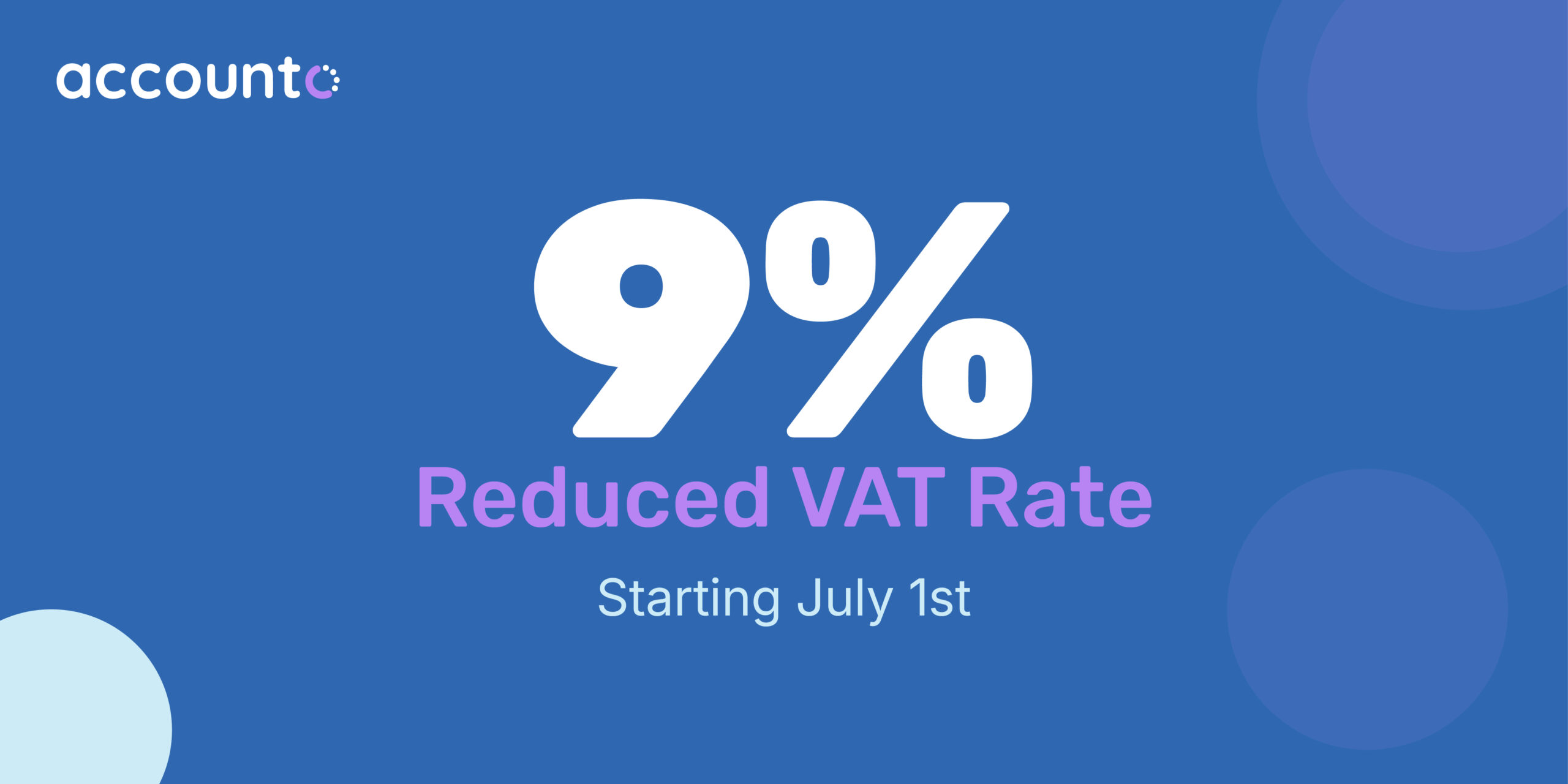
From 1 July 2026, the VAT rate on qualifying food, catering, and hairdressing services drops from 13.5% to 9%. This one’s permanent, with no scheduled expiry date, which makes it a bit different from some of the temporary rate cuts we’ve seen in recent years. For business owners who’ve been absorbing rising energy bills, wage costs, and insurance premiums for a while now, it’s a rare piece of good news. But like most tax changes, the benefit only really lands if it’s set up properly. Your till, your accounting software, and your VAT3 return all need to reflect the new rate correctly, or you’ll end up creating extra work for yourself later.
Here’s what’s changing, who it affects, and what we’d suggest doing before the date arrives.
What’s actually changing
The Government confirmed in Budget 2026 that VAT on restaurant and catering services and hairdressing services will fall from 13.5% to 9% from 1 July 2026. It sits alongside the continuation of the reduced 9% rate on electricity and gas, which is staying in place until the end of 2030.
Worth flagging: this isn’t the older, broader hospitality rate that also covered hotel stays and tourist attractions during the Covid years. This time it’s narrower. From 1 July, the 9% rate applies to:
- Restaurant and café dining
- Catering services
- Hot takeaway food
- Hairdressing services
It does not apply to:
- Alcoholic drinks
- Bottled water, soft drinks, and sports drinks
- Hotel and short-term accommodation (stays at 13.5%)
- Cinema, theatre, and museum admissions (stays at 13.5%)
That last point trips people up more than you’d expect. If you run a restaurant that also serves wine or cocktails, you’ll be charging two different VAT rates on the same bill: 9% on the food, 23% on the alcohol. It’s an easy thing to get wrong on a busy Friday night, and an awkward thing to unpick later if it’s been wrong for a few weeks.
Why it’s worth sorting out now, not in the last few days
If there’s one pattern we tend to see with VAT rate changes, it’s not that people disagree with them. It’s that the actual implementation gets left until the very end. With 1 July landing on a Wednesday this year, that doesn’t leave much room to update your systems, brief your staff, and think through your pricing properly if you start late.
A few things worth working through in advance:
Your till and accounting software need updating correctly, not just generally.
Whether you’re running a dedicated POS system, QuickBooks, Xero, or some combination, every food and hairdressing line item needs to move to 9% from 1 July, while drinks and anything outside the qualifying list stays where it is. If the system applies one blanket rate across everything, you’ll end up either undercharging VAT on drinks or overcharging on food, neither of which you want.
There’s a real decision to make about what happens with the saving.
Dropping from 13.5% to 9% cuts the VAT portion of your price by close to a third. You can pass some or all of that on to customers as lower prices, or you can hold prices where they are and let the improved margin help cover some of the cost pressure you’ve likely been carrying. Either is a reasonable choice. What matters is that it’s a choice you’ve actually made, rather than something that just happens because nobody updated the price list.
Your VAT3 return needs to capture both rates if your period straddles the date.
Most businesses will have a VAT period that includes both sides of 1 July, meaning some sales fall under 13.5% and others under 9% within the same return. Your bookkeeping needs to keep that split clean, or your VAT3 figures won’t add up the way Revenue expects.
A simple checklist for the next couple of weeks
If your business falls into one of the qualifying categories, here’s what we’d be working through right now:
- Confirm exactly which products and services qualify for 9%, and which don’t
- Update your POS system or accounting software so qualifying items move to 9% from 1 July
- Update menus and price lists if you’re changing prices
- Talk your team through it, especially anyone applying VAT codes manually at the till
- Decide your pricing approach and write it down somewhere, so it’s clear and consistent
- Tell your bookkeeper or accountant so the straddling VAT3 period gets handled properly
- Double-check alcohol, soft drinks, and anything else excluded is still sitting at the right rate
The two mistakes we see most often
The first is applying the 9% rate too broadly, most commonly to bottled water or soft drinks served with a meal, when these are specifically excluded and should stay where they were. The second is the straddling period itself: a VAT return that spans both rates needs to be split correctly, not defaulted to one rate for the whole period.
Neither is difficult to fix once you know to look for it. The trouble is usually that nobody looks until the return is already wrong.
Happy to take this off your plate
If you’d rather not spend an evening reconfiguring your till and double-checking VAT codes, that’s exactly the sort of thing we like helping with. We can go through your current setup, make sure everything’s mapped to the right rate, and handle your VAT3 filing for the transition period so you’re not the one untangling it later.
If that sounds useful, get in touch. Book a free discovery call and we’ll talk through what needs sorting before 1 July.
This article is general guidance and doesn't constitute tax advice specific to your business. Please confirm the exact VAT treatment that applies to you with Revenue or your accountant, particularly where your offering is a mix of qualifying and non-qualifying items.